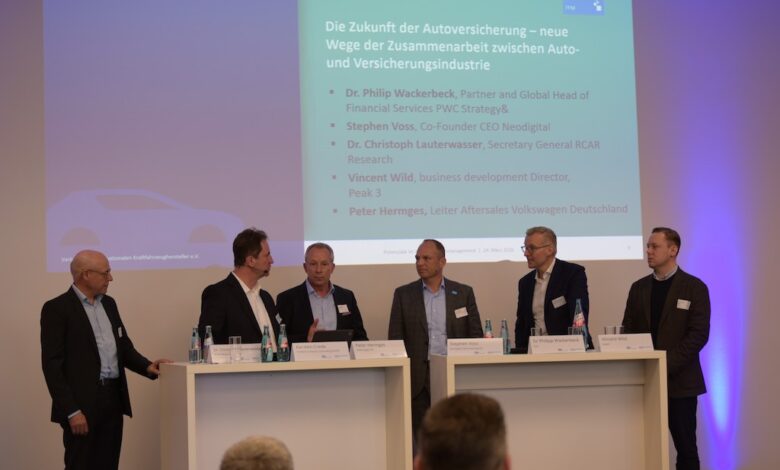
Frankfurt – Asdaf News:
How can automotive manufacturers, the insurance industry and repair shops work together to get a grip on rapidly rising costs in accident repair management? That question was the focus of the “Potential on offer in accident repair management” expert dialogue organised by the Association of International Motor Vehicle Manufacturers (VDIK) and Automechanika Frankfurt.
“Motor vehicle operation has been growing more expensive for quite a few years now. According to the DAT-Report 2026, more than 77 percent of customers do not know if they will still be able to afford individual mobility in future, and maintenance costs are one of the biggest reasons for this. Increasingly complex automotive technologies and higher wages are driving repair costs higher. The result: the vehicle stock is growing older, and large numbers of customers are not even bothering to repair their cars when they are damaged,” according to VDIK President Imelda Labbé.
The automotive industry needs revenues from parts and labour in order to finance the transformation. Insurers are feeling the impact of rising costs for claims settlement. This is endangering the economic viability of insurers’ automotive insurance divisions and has led to significant increases in car insurance premiums in recent years. While everyone involved has instituted measures within their own companies, a joint approach has been notably lacking to date.
Now, the “Potential on offer in accident repair management” expert dialogue has allowed insurers, car manufacturers, retailers and service providers to explore opportunities for comprehensive approaches for their shared customers. The focus was on models for collaboration between insurers and manufacturers and their branded retailers that will increase the efficiency of the claims management process – to ensure the continued affordability of individual mobility. The presentations by Peter Hermges, Aftersales Director for VW Group Brands, and Jens Nietzschmann, Spokesperson of the Board of Management of Deutsche Automobil Treuhand (DAT) offered an impressive demonstration of how data integration in the process chain right through to retailers can already deliver impressive cost savings today.
Karsten Crede, Managing Partner of Crede & Company: “We need to increase cooperation between the sectors. A digital claims management ecosystem offers a possible solution – as part of a constructive collaboration between the automotive and insurance industries and retail organisations. That creates the basis for the sustained success of customer-friendly automotive insurance in future.”
In his presentation, Frans Ditmer, Chief Commercial Officer of Fixico, outlined a model using customer waiting times, cost controls and repair quality as shared KPIs.
There are many areas ripe for optimisation, ranging from rental car costs, missing spare parts and a lack of repair information to process chains that have still not been integrated. One possibility would be shared digital platform concepts that make it possible to better utilise existing data and more efficiently control claims management processes. Participants in the panel discussion that followed the presentations were all in agreement that speed is of the essence in the claims management process, and that it offered the best way to cut costs. This applies not only to workshop costs, but also to rental car and process costs. There are also gains to be made by having manufacturers and insurers work together to refine existing vehicle type categories !!!! based on vehicle data, because many of the parameters underlying insurance premiums can already be defined from the development and design process for the individual vehicle models.
One platform where more possible solutions can be discussed and dialogue fostered among players will be Automechanika in Frankfurt this autumn. Michael Johannes, Vice President Mobility & Logistics at Messe Frankfurt and Brand Manager of Automechanika: “Accident damage and repair management is increasingly important for car manufacturers. This has become a strategic issue that is of decisive importance not only to sales potential in the aftermarket, access to vehicle data and customer loyalty, but also to a company’s competitiveness. This year, the Workshop area will once again be welcoming automotive manufacturers to the fair who will be presenting their aftersales concepts and services. On 11 September, the second to last day of the event, the long-established Collision Talk will be addressing the automation of processes, market consolidation and robotics.”
This year’s Automechanika is taking place from 8 to 12 September at the Frankfurt exhibition grounds.